Skip to Main Content (Press Enter)
Internet Explorer is not supported. For the best experience use another browser.
A Toyota bZ4X parked charging in the street

Battery electric vehicles vs petrol cars

A battery electric vehicle (BEV) runs entirely on electric power stored in a rechargeable battery, while a petrol car uses an internal combustion engine fuelled by petrol. As fuel costs fluctuate, public charging networks grow and a wider range of electric cars becomes available, which one is better - BEV or petrol? We break down the pros and cons of BEVs versus petrol cars to help you decide which is right for you.

Key differences between electric and petrol cars

These are the main things to consider when choosing between a BEV and a petrol car.

  • Battery Electric Vehicle (BEV)

    Road tax (VED) (2026/27)
    £10 for first year, then £200 per year
    Company Car Tax (BIK) (2026/27)
    4% BIK rate
    Servicing frequency
    Typically every 10,000 mi / 1 year
    Refuelling / charging time
    28 min (rapid) to 7 hrs (fast)*
    Range (typical)
    250–370+ miles
    CO₂ tailpipe emissions
    0 g/km**
    Driving experience
    Instant torque, quiet
  • Petrol car

    Road tax (VED)
    From £280 per year, depending on emissions
    Company Car Tax (BIK)
    15-37% depending on CO2 emissions
    Servicing frequency
    Typically every 10,000–12,000 mi / 1 year
    Refuelling / charging time
    Approx. 5 minutes
    Range (typical)
    350–500+ miles
    CO₂ tailpipe emissions
    Approx. 120–180 g/km (varies by model)
    Driving experience
    Familiar, engine noise

Pros and cons: electric cars vs petrol cars

Weigh up the benefits of each type of vehicle, based on a number of facts.  

  • Electric cars

    Pros

    • Lower energy cost per mile, especially with home charging
    • Instant torque and smooth acceleration
    • Quieter driving experience
    • Purchase prices increasingly approaching petrol cars
    • Lower maintenance and servicing costs (Source: RAC)
    • Charge conveniently at home overnight
    • More EV chargers than fuel pumps (Source: GOV.UK)
    • Zero tailpipe emissions
    • Significant company car tax (BIK) savings vs petrol
    • Built on Toyota's proven electrification technology, backed by 3 decades of expertise

    Cons

    • Longer charging times vs petrol refuelling
    • Range limitations on longer journeys
    • Public charging network still growing in some areas
    • Battery degradation over time (covered by Toyota warranty)
    • Repair costs can be higher
    • Often higher insurance groups - but the gap is narrowing (Source: RAC)


  • Petrol cars

    Pros

    • Extensive, well–established refuelling network
    • Fast refuelling in minutes
    • Proven, familiar technology
    • Engine noise appeals to some drivers
    • Wide model choice
    • Well–understood residual/resale values
    • Typically lower insurance groups (but the gap is narrowing)


    Cons

    • Higher fuel cost per mile
    • Dependent on fuel prices
    • Higher maintenance costs
    • Noisier to drive
    • Tailpipe emissions - CO₂ , Nitrogen Oxides (NOx), Particulate Matter (PM), etc. 
    • Restrictions and higher costs in some clean air zones (e.g. ULEZ)
    • Significantly higher company car tax (BIK) rates

Running costs of BEVs vs petrol cars

One of the key factors when comparing BEVs to petrol cars is the day-to-day running cost. Battery electric vehicles (BEVs) are typically cheaper to run than petrol cars - especially when charging at home. Public rapid charging can approach the cost of petrol per mile, but it is not needed for the majority of short to mid-distance trips. Petrol cars benefit from fast refuelling, but fuel prices can fluctuate significantly and service and maintenance costs can be higher over time. 

Charging BEVs vs refuelling petrol cars

As the driving range of electric cars has increased, and the charging network has expanded significantly, EVs are now well-suited to longer trips. Petrol cars remain capable of driving longer distances between fuelling stops, and filling up is faster than recharging.

  • Electric charging vs petrol refuelling

    Charging an electric car

    • Charging at home using a wall box is preferred by most BEV owners – it is convenient, cost-efficient, and the car is ready to drive in the morning if you charge overnight
    • You can save even more with a Toyota HomeCharge and smart charging, which automatically charges the car when energy rates are lowest dependent on the electricity tariff you are using
    • Charging away from home is easy too with the Toyota Charging Network – and you benefit from lower costs at some chargers
    • The UK public charging network is already widespread and continues to grow rapidly, particularly along major travel routes and in urban areas. 
    • The range of modern BEVs comfortably covers day-to-day driving, with rapid charging only needed on longer trips
  • Fuelling a petrol car

    • Refuelling is faster than recharging
    • Petrol cars tend to have a longer range before needing refuelling.
    • The price of petrol is affected by global supply and taxation

Helpful EV tools

Range calculator

<p>   </p>

Range calculator

Saving cost calculator

<p>    </p>

Saving cost calculator

Charging time calculator

<p>   </p>

Charging time calculator

Map of charging stations

<p>  </p>

Map of charging stations

Maintenance and service costs of electric cars vs petrol cars

How often do electric cars need servicing?

<p>Toyota BEVs have service intervals of 1 year/10,000 miles – the same as petrol cars – but service costs are lower because there are fewer moving parts. </p>

A Toyota owner getting their car keys back after having their car serviced

Common maintenance costs compared

<p>Electric car maintenance can be up to 29% cheaper than that of petrol cars over the first five years. See the table below to compare common servicing requirements.</p>

A Toyota owner checking their car status via the MyToyota app

How long do electric car batteries last?

<p>Batteries are designed to last the lifetime of the vehicle. Most modern EV batteries are warrantied up to 8 years or 100,000+ miles. Toyota's service-activated Battery Care Programme offers a unique advantage: it extends the battery cover, guaranteeing the battery will retain at least 70% of its original capacity up to 10 years of vehicle age. ‡</p>

Eye-bird view on a Toyota car chassis
  • BEV

    Oil change

    Not required

    Brake pads

    Longer lasting (regenerative braking)

    Tyre wear

    Comparable to petrol cars

    Battery health check

    Recommended annually

    Typical annual full service cost

     from £310

  • Petrol

    Oil change

    Every 10,000-15,000 miles

    Brake pads

    Standard replacement cycle

    Tyre wear

    Standard, based on vehicle weight and use

    Battery health check

    N/A - but annual service is required

    Typical annual full service cost

    from £350 - £420

Who would benefit the most from an electric vehicle? 

A wide range of drivers can now benefit from choosing an electric car.

Regular commuters with a home charger

If you can charge at home, an electric car fits easily into your daily driving routine. Benefit from efficient charging costs with off-peak energy tariffs.

Budget-conscious used car buyers

As used EV prices become more competitive, a used electric car with good battery health can offer smooth driving and lower day-to-day energy costs than a petrol car.

High-mileage and taxi drivers

For high-mileage drivers, lower EV running costs compared to petrol cars can add up to meaningful savings over a typical vehicle ownership period. (Source: GOV.UK)

Who would benefit the most from a petrol vehicle? 

You might prefer a petrol car if you live in an area with underdeveloped charging infrastructure or if you tow regularly, particularly over long distances where fast refuelling is important.

Living with an electric vehicle vs a petrol car

The electric vehicle driving experience will feel very familiar if you're used to driving a petrol car with an automatic transmission – and you will enjoy a few added benefits.
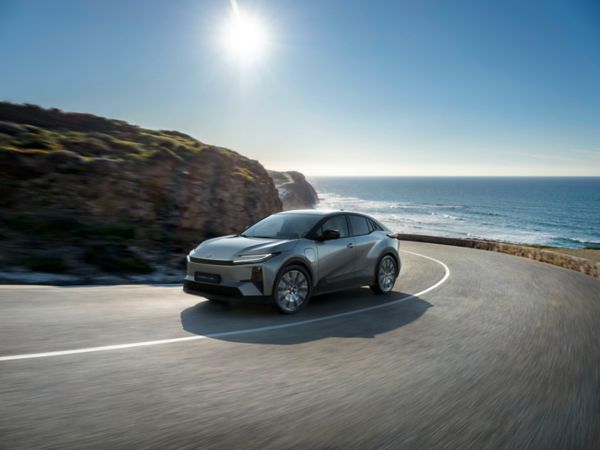
  • Acceleration and performance: BEVs deliver instant torque for quick, responsive acceleration, while petrol engines build power more progressively. Although EVs are typically heavier, the low-mounted battery lowers the centre of gravity, improving stability and cornering.
  • Comfort and noise: With the battery pack mounted under the floor, BEVs often offer more cabin space than equivalent petrol cars. The absence of an engine also creates a quieter cabin, while petrol vehicles produce familiar engine noise.
  • Charging at home vs visiting a petrol station: Home charging with a wall box is the most convenient and cost-effective way to run an EV, especially on overnight EV tariffs. Most UK EV drivers regularly charge at home (source: Our annual driver survey | EVA England : EVA England), while petrol cars require regular refuelling and typically have higher fuel costs per mile.

  • Long–distance driving: range, charging and refuelling: For longer journeys, petrol cars offer quick refuelling and familiar range confidence, while EVs may require some route planning. However, the UK public charging network continues to expand, with rapid chargers at motorway services adding substantial range during a short stop.

  • Efficiency in cold weather: Cold weather can reduce BEV range by up to 30% as batteries operate less efficiently and more energy is needed for cabin heating – which is why Toyota electric cars use heat pump technology to reduce the energy required to heat the cabin. Petrol cars are also less efficient in cold weather, but the impact is usually less noticeable because combustion engines generate heat that is used to warm the cabin.

Insurance and tax of electric cars vs. petrol cars

As the BEV market grows, insurers and resellers are adapting to improvements in technology, although significant variation between brands and models still prevents broad generalisations.

  • Are electric cars more expensive to insure? 

    Electric cars are often put into higher insurance groups than equivalent petrol cars, primarily due to specialist parts, battery damage assessment, and higher vehicle values. However, the gap is narrowing as more insurers gain experience with BEVs and the repair network expands. 

    (Source: RAC)

  • Company car tax (BIK) rates for electric vehicles vs petrol cars

    Battery electric vehicles benefit from significantly lower Benefit in Kind (BIK) tax rates than many petrol company cars, which can help reduce company car tax costs for eligible drivers.

    (Source: GOV.UK)

    Company Car Tax Calculator

The environmental impact of electric vehicles vs petrol cars

A vehicle's environmental footprint goes beyond tailpipe emissions. 

Tailpipe emissions compared

Electric cars produce zero tailpipe emissions, making them ideal in urban low emission zones (ULEZ). While modern petrol engines are significantly cleaner than previous generations, they still produce tailpipe CO₂ and NOx emissions that contribute to climate change and local air pollution.

Battery production and recycling

Battery production has an environmental cost, from sourcing raw materials to the energy required for manufacturing. The environmental impact of petrol cars also begins during manufacturing, and it continues with fuel consumption and tailpipe emissions over the vehicle’s lifetime.

Lifecycle carbon footprint

Battery electric vehicles have substantially lower lifecycle emissions than petrol cars over a typical ownership period because they produce no tailpipe emissions while driving and use energy more efficiently. (Source: GOV.UK)

Electric vs Petrol: Which Is Best for You?

If you're not sure whether an electric or a petrol car is right for you, use the checklist below to help you decide.

Do you drive under 150 miles per day?

If you do, an electric car will comfortably cover this on a single charge, even in cold weather.

Do you have a home charger or off-street parking where one could be installed?

A home charger makes overnight charging convenient, ensuring the car is ready to go in the morning, while low-rate EV energy tariffs can further reduce your running costs. If you rely on public charging, an electric car may still be a practical option, especially if you have access to charging near your home, workplace, or daily routes.

Do you frequently make long motorway journeys?

Rapid charging is widely available at motorway service stations, where a full charge can be completed in about 30 minutes. However, if you regularly drive long distances and prefer to minimise stops, a petrol car may still be the more practical option.

Have you looked at the running costs?

BEVs have a lower cost per mile (especially if charged at home) as well as lower maintenance costs. Petrol cars tend to be cheaper to insure but cost more to run and service.

Is environmental impact a priority?

BEVs produce zero tailpipe emissions and, as battery technology and recycling continue to improve, their overall lifecycle emissions are becoming increasingly lower than those of petrol cars. 

Do you prefer a quiet, smooth ride or a traditional engine feel?

Electric cars are smooth, responsive and quiet, without the engine sound associated with petrol cars.  

Do you regularly drive into ULEZ or clean air zones?

With zero tailpipe emissions, electric cars can freely access low-emission zones. Although modern petrol engines are becoming cleaner and more efficient, driving in ULEZ and other emissions-controlled areas may still incur additional charges, making it important to consider these potential costs. 

FAQS

  1. All

To estimate EV cost per mile, divide your electricity cost per kWh by the car’s efficiency in miles per kWh -  Toyota’s EV cost calculator can help you do that in seconds.

Electric cars are generally cheaper to run than petrol cars because electricity typically costs less than petrol per mile especially when charging at home, and EVs have lower servicing and maintenance costs. 

The exact savings depend on electricity prices, fuel costs and driving style, but most drivers find home charging can significantly reduce day-to-day running costs compared with petrol. 

Driving an EV can cost more per mile than a petrol car when regularly using public rapid chargers, for instance along motorways. However, long-distance trips are only occasional for most drivers, while the majority of charging is done at home at lower electricity rates, making EVs overall significantly cheaper to run than petrol cars.

Over 5 years, a BEV can cost less to own than a petrol car thanks to lower costs of home charging and servicing. While some BEVs may have a higher upfront purchase price, lower running costs can help offset this over time. Savings depend on factors such as annual mileage, electricity and fuel prices and charging habits.

Insurance costs for BEVs can be higher than for a petrol car, but the gap is narrowing. Insurance premiums also vary by driver, vehicle and insurer.

For many drivers, a used electric car with good battery health can offer lower running costs than a used petrol car, particularly if you can charge at home. Used EVs also produce no tailpipe emissions while driving and often come with battery warranty coverage for added reassurance.

Over its lifetime, an electric car typically produces lower overall emissions than a petrol car, even when EV battery production is included. While battery manufacturing creates emissions upfront, petrol cars continue to produce tailpipe emissions every time they are driven, which adds up over the vehicle’s life. Source: https://www.gov.uk/government/publications/lifecycle-analysis-of-uk-road-vehicles (Opens in new window)

Electric cars are generally better for the environment than petrol cars because, although they can produce more emissions during manufacturing, they create no tailpipe emissions when driven and typically result in much lower overall lifecycle CO₂ emissions.

Electric cars can often accelerate faster than comparably powered petrol cars because electric motors deliver instant torque as soon as you press the accelerator.

However, overall performance depends on the specific vehicle, with both electric and petrol cars available in a wide range of power and performance levels.

Energy consumption will vary depending on driving style, speed, road conditions and other factors. Smooth acceleration can help optimise efficiency and driving range.

A mid-range EV will often accelerate from 0–60 mph faster than a comparably powered petrol car because electric motors deliver instant torque from a standstill. This can make EVs feel quicker and more responsive in everyday driving.

Electric cars offer a quieter, smoother and more responsive driving experience than petrol cars because electric motors deliver instant torque and operate with less vibration and noise. Many drivers also find EVs more relaxing to drive, particularly in urban traffic.

The acceleration of an electric car often feels quicker and more immediate than a comparably powered petrol car because electric motors deliver instant torque as soon as you press the accelerator. This gives EVs smooth, responsive acceleration, particularly from low speeds. Petrol cars typically build power more gradually through the engine and gears, creating a different driving feel.

Electric cars are quieter and smoother on the motorway than petrol cars because electric motors produce less noise and vibration than internal combustion engines. This can make long-distance driving feel more relaxed and refined. However, in the absence of engine noise, tyre and wind noise can become more noticeable at higher speeds, which is why Toyota BEVs feature dedicated sound management throughout the vehicle.

Electric cars can perform very well on long trips, with many modern EVs offering ranges suitable for longer journeys alongside smooth, quiet and comfortable motorway driving. However, long trips in an EV usually require longer charging stops compared with refuelling a petrol car. 

Cold weather can reduce an electric car's range by up to 30%, compared with a smaller impact on a petrol car's fuel economy, because EVs use some battery energy to heat the cabin and keep the battery at its optimal operating temperature.

The real-world range of an electric car is typically lower during winter than on a warm summer day, because cold temperatures reduces battery efficiency and increase battery and cabin heating demands.

Driving at motorway speed reduces the range of an electric car more noticeably than it affects the fuel economy of a petrol car. This means real-world EV range is lower on long motorway journeys than in urban or mixed driving.

Dynamic EV Routing, available via the in-car multimedia system can automatically plan and adjust charging stops during longer journeys, helping drivers travel more confidently without needing to closely manage range or charging locations.

Electric cars are typically 300–500kg heavier than equivalent petrol models due to the battery pack, but this extra weight is mounted low in the chassis, lowering the centre of gravity and improving stability and cornering grip.

Some electric SUVs can offer towing capacities comparable with similarly sized petrol SUVs, depending on the model and powertrain. Toyota AWD BEVs such as the bZ4X and bZ4X Touring offer braked towing capacities of up to 1,500kg, supporting a range of towing needs◊◊.

◊◊Towing will increase energy consumption and reduce driving range; actual range will vary depending on conditions and trailer weight.

Electric cars built on dedicated EV platforms can offer more interior space than similarly sized petrol cars because the battery is integrated into the floor, helping create more legroom and enhance passenger comfort.

Home charging using a dedicated charger is the most convenient and cost-effective way to power an electric car, with most drivers charging overnight to take advantage of off-peak energy rates.

The UK public charging network is already widespread and continues to grow rapidly, particularly along major travel routes and in urban areas. Source: How many ev charging points are there in the uk? Source of government official statistics

Public rapid charging uses DC power to charge the battery directly, while public fast charging uses AC power that is converted by the vehicle before reaching the battery.


Rapid charging is typically available at motorway services and along major travel routes, allowing drivers to add range in less time, although it is generally more expensive than fast charging.


Fast chargers are typically used when a vehicle will be parked for a longer period, such as at supermarkets, workplaces or public car parks.

Rapid charging in cold weather takes considerably longer because low battery temperatures reduce DC charging performance, which is why Toyota BEVs offer battery pre-conditioning to warm the battery before rapid charging and help improve charging speeds in colder conditions.

Battery pre-conditioning is useful before rapid charging in cold weather because warming the battery can help improve charging speeds and reduce charging times.

Batteries are designed to last many years. Toyota electric car batteries benefit from a warranty of up to 1 million miles until your vehicle turns 10 years old.

Toyota BEVs have service intervals of 1 year/10,000 miles - the same as petrol cars - but service costs are lower because there are fewer moving parts.


View service pricing

Regenerative braking reduces wear and tear on brake pads because the electric motor helps slow the car down, reducing reliance on the conventional brakes during everyday driving. At the same time, the system  recovers energy back into the battery during deceleration.

Electric cars are more efficient than petrol cars in stop-start traffic because they use very little energy when stationary and can recover energy through regenerative braking during deceleration. While many modern petrol cars use stop-start systems to improve efficiency in traffic, EVs remain more efficient in urban driving conditions.

Every new Toyota EV traction Battery comes with an 8-year/100,000 mile manufacturer's warranty automatically. The Toyota Battery Care Warranty is available on full battery electric vehicles (excluding the Proace) and covers the EV traction Battery only. This warranty is applied automatically on the completion of each Eligible Service and lasts up until the next scheduled routine service. Eligible Services are available until the vehicle turns 10 years old or reaches 1 million miles (whichever comes first). Terms and conditionsdownload (pdf(.

*Battery electric vehicle requiring mains electricity for charging. Indicative charge time, for comparison purposes. Actual charging times may vary depending on various factors, including the selected vehicle (and battery option, if available), the age, type, condition and temperature of the charging unit and the battery, the starting charge, the power supply to and usage of the charger and the environmental conditions at the point of use. These figures may not reflect your real life driving results. 

Charge times will be longer in colder weather and if battery temperature activates safeguarding technology. 150kW+ chargers are available in mainland Great Britain primarily on major arterial routes – see Zap Map for details. They are not yet available in Northern Ireland and availability is limited in Scotland, Wales and in rural areas.

**Figures obtained after full battery charge. Battery electric vehicle requiring mains electricity for charging. Electric range figures were achieved using the WLTP test procedure and are provided for comparison purposes. Only compare CO₂ and electric range figures with other cars tested to the same technical procedures. These figures may not reflect real life driving results, which depend on various factors including the starting charge of the battery, accessories fitted (post-registration), variations in weather, driving styles and vehicle load.

Key differences between electric and petrol cars

Road tax rates are based on CO2 emissions. Find out more about how much road tax you need to pay.

Company car tax rates are based on CO2 emissions. Find out more about the BIK rate you will pay based on your company car.

Range is dependent on model.