Skip to Main Content (Press Enter)

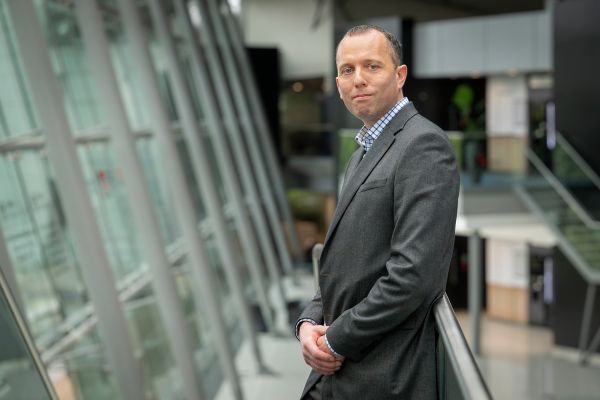
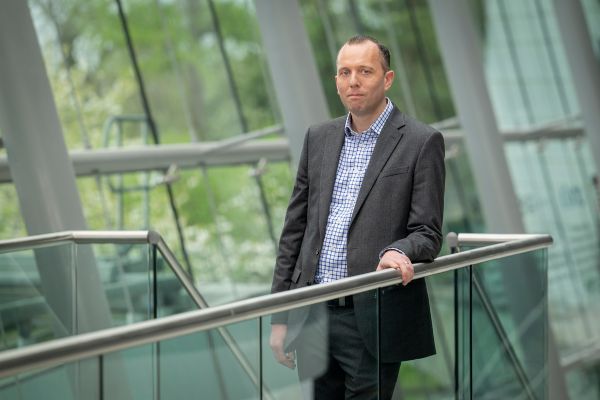
Interviewee: Alastair Rutt

Role: Senior Fleet Sales Manager, One Toyota Business Team

Q: Can you describe your role, experience and what a typical day looks like for you?

A: I’m the National Fleet Sales Manager. I lead a large and diverse team of fleet consultants, and it’s my job to ensure that a customer-first mindset is embedded in everything we do. My experience in the motor trade spans more than 20 years. I began in a Service Department at a Toyota and Lexus dealership, starting out as a service advisor. I then moved into fleet, progressing through roles as a fleet sales executive, business centre manager, and ultimately running fleet operations for one of our largest dealer groups. I’ve also worked in a multi-brand brokerage and rental department, which means I bring a well-rounded understanding of the fleet sector to my current role.

What I love about this job, and about the automotive industry in general, is that no two days are ever the same. It’s fast-paced, customer-facing and requires quick decision-making. On an operational level, I work closely with the team to agree customer terms and discounts. At a strategic level, I collaborate with colleagues at head office to shape our approach to the market. That includes decisions about the products and powertrains we bring to the UK, the finance solutions we offer, and the tools and data we use to consult with customers. It’s a hands-on role, but also a big-picture one. I also work closely with our Retailer Network, which I see as an extension of our national team.
Q: How does bringing together Toyota, Lexus and KINTO help you deliver a more compelling fleet offer?

A: It’s a major strength. As a One Toyota Business Team, we can present a unified offer across all brands and services. That means we can support a business with everything from an Aygo to a Hilux, a heavy-duty Proace Max or a luxury Lexus RX plug-in hybrid. We can also support their funding through Toyota and Lexus Financial Services and provide leasing through KINTO.

Beyond that, we’ve created bespoke solutions for specific segments. For example, we’ve developed dedicated service plans for Uber drivers and are exploring usage-based insurance with Toyota Insurance Services. This breadth of offer helps us act as a one-stop shop and, most importantly, makes it easier for customers to manage their fleet needs.

Q: How does your work directly benefit fleet customers?

A: We take a consultancy-led approach and always put the customer at the centre of what we do. In practice, that means helping customers make better-informed decisions that lead to greater fleet efficiency. For example, we support their transition to electrification and decarbonisation using data and insights. We want to give them options rather than a mandate.

We also work closely with our aftersales colleagues and our Network to develop pilots such as predictive maintenance. This uses built-in telematics to identify issues before they happen, helping fleets plan downtime more efficiently. For fleet operators, every minute a vehicle is off the road is time they’re not earning, so this makes a real difference. More broadly, we aim to deeply understand the needs of each customer and match our products and services to meet those needs.

Q: Are there common challenges and opportunities you discuss with customers?

A: Electrification is one of the biggest topics. Most customers know they need to decarbonise, but they want clarity on how to do that. One way we help is through telematics. We analyse journey data and show customers which vehicles could move to electric today with no impact. As an example, we might identify 20 vehicles in a fleet of 200 that could switch immediately.

Some vehicles might require route adjustments to accommodate charging. Others may not yet be ready for electrification. In those cases, a hybrid like the Corolla Commercial could be a great interim solution. It uses petrol but maximises its efficiency, reducing overall carbon output. There’s no one-size-fits-all answer, so we work with customers to build tailored solutions.

  • Q: Toyota is known for reliability. How does that translate into value for fleets?

    A: Reliable vehicles mean better uptime. The less time a vehicle spends off the road, the more value it delivers. That’s why our engineering standards are so high. The Toyota Production System, which is recognised worldwide, drives a philosophy of continuous improvement. That mindset applies beyond manufacturing and into our office systems as well.

    For example, our direct invoicing process is streamlined to reduce admin for customers. And when things do go wrong — which is rare but can happen in large fleets — our approach is to work with the customer, take ownership and resolve issues quickly. It’s a partnership, not just a transaction to sell a vehicle.

Q: How do you help customers find the right vehicle for their needs?

A: We offer one of the broadest ranges on the market, from compact cars to commercial vehicles and luxury Lexus models. But the real advantage is in the diversity of our powertrain line-up. Customers can choose from petrol, hybrid, plug-in hybrid, EV and hydrogen.

For example, a business operating off-road may benefit from a Land Cruiser or Hilux. A sales rep covering long distances might prefer a plug-in hybrid with 30–40 miles of electric range but no need to charge mid-journey. We help customers match the right vehicle and powertrain to their real-world use cases.

Q: How are you using data to support better decision-making?

A: We aim to use Total Cost of Ownership (TCO) modelling to help our clients understand the true cost of their vehicles over their individual change cycle and mileage. By using independent data encompassing robust predictions around Residual Values (RVs), Service, Maintenance and Repair (SMR) costs and other contributing factors we help our customers choose the right vehicle for them. This is especially useful when looking at different vehicles within our multi-path powertrain strategy. Vehicles that may be more expensive to buy can often be better value over the lifetime of the vehicle due to taxation, SMR or RV variances. By openly providing this information to our customers it enables them to make a fully informed choice using the independent data to guide them.

Q: How do you work with the wider business to deliver long-term value?

A: Toyota’s strength lies in its people. Many of us have been with the company for 20 or 30 years, but we also bring in new talent every year. This mix creates a strong, collaborative culture. We regularly rotate team members between departments, which means people know each other and can solve problems quickly.

One example of this in action is our response to Uber’s needs. We created a 0% APR finance offer for Uber drivers. We also introduced a bespoke fleet service plan using discounted parts, available at more than 180 Toyota Centres, and backed by up to 10 years or 100,000 miles of warranty. These solutions only happen when teams work together and stay focused on customer outcomes.

Q: How are customers approaching electrification, and how do you help?

A: It all comes back to personalisation. No two customers are the same. My team spends time getting to know both the individuals and the businesses. When I was out selling vehicles myself, the most satisfying part was understanding how each business made its money.

Some operations, like parcel delivery, are ready to go electric right now. Others, like heavy plant logistics, need more time. Our role is to understand their journey and help them move at the right pace. Everyone wants to decarbonise, but we help them do it in a way that fits their specific business.

Q: What tools or support do customers value most?

A: It’s all about people. We’ve invested in a field-based team of 18 fleet professionals, while some competitors have scaled back. Every member of the team is a fleet specialist and Toyota Finance accredited. We also have electrification champions who stay on top of industry news and share best practice with customers.

We don’t just provide information. We ask good questions, challenge assumptions and suggest new approaches. It’s about showing customers there might be a better way. That mindset is something they really appreciate.

Q: How do finance solutions support better decision-making?

A: Having a broad range of finance options is essential. Uncertainty is part of life now, so customers need flexibility. That might mean a vehicle that doesn’t incur penalties at the end of a lease, or a solution that maximises tax and VAT efficiency. Through Toyota Financial Services and KINTO, we offer the choice customers need to make the right decision for their business. Whether they’re running commercial vans or passenger cars, we tailor the finance to fit.

Q: Can you share a recent example of solving a customer challenge?

A: We’ve worked with one customer for over 20 years. When they came to us about electrification, we didn’t push for a full switch. Instead, we analysed their needs and worked with them to plan a phased transition. Some vehicles are changing now, others later. It’s a practical, data-led approach that works for their business.

Q: What does Better Business mean to you?

A: Better Business for me is all about understanding the customer, understanding the individual needs of the business and personalising our approach to deliver the products and services that really make a difference.

Q: What is your favourite Toyota vehicle?

A: It has to be the Prius. I’ve known it since the early days in the network, and I’ve always admired what it represents. The new model in mustard yellow is stunning. It shows how far design and technology have come, and as a plug-in hybrid, it’s a fantastic option for company car drivers.